
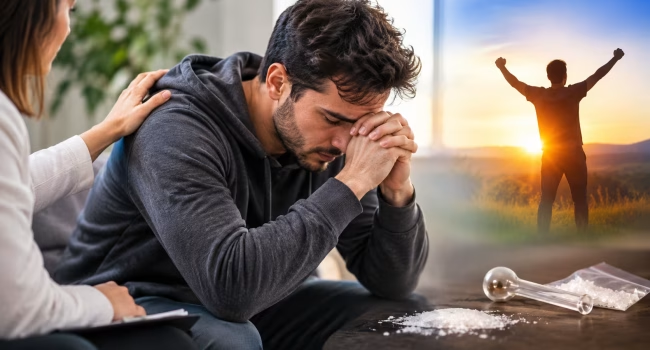
Meth Addiction Treatment Albuquerque What Actually Works
Meth is different, and anyone who has been around it knows that.
It doesn’t build slowly the way alcohol often does. It takes hold fast, it takes more than most substances take, and the aftermath is harder to explain to people who haven’t watched it happen. Sleep goes. Weight goes. Then the job, then the relationships, then the version of yourself you used to recognise in the mirror.
New Mexico has been dealing with this for a long time. Stimulant involved overdose deaths across the state have climbed year after year and Bernalillo County carries a large share of that. If you’re searching for meth addiction treatment Albuquerque based, you’re not looking for something rare or unusual here. You’re looking for something a lot of families in this city need.
Here’s what treatment actually involves, and what to expect from it.
Why meth is harder to treat than most people assume
Meth floods the brain with dopamine at levels nothing in ordinary life comes close to. Not food, not sex, not exercise, not good news. Over months and years the brain adjusts by pulling back its own dopamine production and reducing the receptors that respond to it.
Which leaves you in a rough spot. Without meth, nothing feels like anything. Food is bland. Music is flat. Your kid tells you something funny and you can hear that it’s funny but you don’t feel it. This is called anhedonia and it’s the single biggest reason people go back.
Understanding this changes how you read a relapse. It isn’t weakness or a lack of love for your family. It’s a brain that has temporarily lost its ability to generate reward on its own, sitting in a world that suddenly feels grey.
The good news, and this is genuinely good news, is that it comes back. Imaging studies from NIDA have shown dopamine transporter levels recovering substantially over roughly twelve to fourteen months of abstinence. Not overnight. But recovery isn’t a metaphor here, it’s something you can see on a scan.
Withdrawal, and why the first three weeks matter most
Meth withdrawal doesn’t usually threaten your life the way alcohol withdrawal can. That’s often used to argue it isn’t a big deal. Anyone who has been through it will tell you otherwise.
The first week is mostly exhaustion. Sleeping twelve or fifteen hours and still feeling wrecked. Enormous appetite. Fog.
Weeks two and three are where most people quit trying. The crash has passed but nothing has replaced it. Depression settles in, cravings arrive in waves, and the sense that this is what life is now becomes very convincing. It isn’t true, but it’s convincing.
This is exactly why structured treatment matters more than willpower during this stretch. Not because you’re incapable. Because week two is designed to make you believe you are.
What actually works
Here’s something worth knowing up front. There’s no FDA approved medication for methamphetamine use disorder the way there is for opioids or alcohol. Any Albuquerque clinic promising you a pill that handles it is overselling.
What does have real evidence behind it is behavioural, and it works better than most people expect.
Contingency management
has the strongest research base of anything in stimulant treatment. The idea sounds almost too plain. You provide a negative drug test, you receive a small tangible reward. Vouchers, prizes, gift cards. Trial after trial has shown it outperforms other approaches for stimulant use specifically, and SAMHSA has backed its use.
Why does it work? Because it gives a dopamine starved brain something immediate and real to respond to while its own reward system is offline. It’s a bridge across the worst months.
The Matrix Model
is the other pillar. It was built specifically for stimulant users, running around sixteen weeks and combining group sessions, individual therapy, family education, drug testing and relapse prevention into one intensive schedule. It’s the most established structured program for meth in the country.
Cognitive behavioural therapy
teaches you to catch the chain that leads to use. The thought, the feeling, the person you text, the drive across town. Break the chain early enough and the outcome changes. These skills tend to hold up long after the program ends.
Treating what’s underneath.
A large share of people using meth are also carrying depression, PTSD, ADHD or bipolar disorder. Treat the addiction alone and leave that untouched and you’re rebuilding a house without fixing the foundation. Integrated care handles both together.
Some medication support,
used honestly. The ADAPT 2 trial found a combination of injectable naltrexone and bupropion produced a modest benefit for some patients. Modest is the accurate word. It supports the behavioural work rather than replacing it, and a good prescriber will frame it that way rather than as a cure.
Outpatient or residential
Both are legitimate. The question is which fits your circumstances.
Residential makes sense when home is where the using happens, when there’s no safe place to be at night, when psychosis or serious medical complications are in the picture, or when outpatient has been tried more than once without holding.
Outpatient works when you’ve got somewhere reasonably stable to sleep, when you’ve got obligations you can’t walk away from, and when at least one person around you knows what you’re doing.
An intensive outpatient program usually means three to five sessions a week over eight to twelve weeks. You get real structure and frequent contact while keeping your job and your housing. For a lot of people in Albuquerque, that combination is the difference between starting treatment and putting it off for another year.
New Horizon Behavioral Care runs outpatient stimulant treatment in Albuquerque combining group work, individual therapy, family sessions and court compliant documentation where that’s needed.
When CPS or the courts are involved
A lot of meth cases in New Mexico arrive through CYFD or probation rather than through someone deciding on their own that today is the day.
If that’s your situation, be direct with the program about it from the first phone call. Ask whether they provide observed testing, attendance verification and progress reports written to court standard, and ask how fast those reports go out. A report that shows up after your hearing helps nobody.
And here’s the part worth hearing clearly. Court mandated treatment works. Research on mandated clients consistently shows outcomes comparable to voluntary ones. Plenty of people walk in furious about being made to attend and walk out at week twelve genuinely glad it happened. How you arrive matters far less than what you do once you’re there.
Frequently Asked Questions
How long does meth addiction treatment take?
Most structured outpatient programs run somewhere between twelve and sixteen weeks. But treatment and recovery aren’t the same length. Brain recovery from stimulant use continues for around a year or more, which is why aftercare and ongoing support after the formal program ends matter so much.
Is there a medication that treats meth addiction?
Not one that’s FDA approved specifically for it. Some prescribers use a naltrexone and bupropion combination based on trial evidence showing modest benefit, and medication is often used to treat co occurring depression or anxiety. Anyone offering a straightforward pharmaceutical fix is not being straight with you.
Can I get treatment without going to residential rehab?
For many people, yes. Intensive outpatient programs deliver structured treatment several days a week while you continue living at home and working. Whether it’s the right level for you depends on your living situation, your medical picture and your treatment history, which is what an assessment sorts out.
How long until I feel normal again?
The heaviest fog usually lifts across the first four to six weeks. Sleep and appetite settle earlier than mood does. Anhedonia, that flat feeling where nothing lands, is the slowest to go and often takes several months. Knowing this in advance helps, because the point where people quit is usually right before things start improving.
Will my treatment be reported to CPS or the court?
Only with your written authorisation, or where a court order requires it. Your treatment records are protected under HIPAA and under federal confidentiality rules covering substance use records. If you’re in a court or CYFD process, you’ll sign a release specifying exactly what gets shared and with whom.
Does Medicaid cover meth addiction treatment in New Mexico?
New Mexico Medicaid covers outpatient behavioural health and substance use services. Most marketplace and employer plans do as well, since federal parity law requires coverage comparable to medical care. Ask the program to run a benefits check before you enrol so you know your copay up front.
What happens if I relapse during the program?
You keep going. Relapse is common in stimulant recovery and a decent program treats it as clinical information rather than grounds for removal. What did the lead up look like, what got missed, what changes in the plan. Programs that discharge people for relapsing are treating addiction like a discipline problem, and that’s worth knowing before you enrol.
Where to start
An assessment. That’s it, that’s the first step.
It’s a conversation about your history, your use, what else is going on and what your circumstances actually allow. It ends with a recommendation about the level of care that fits you rather than the one you assumed you needed.
Meth is a hard thing to come back from. It’s also something thousands of people in New Mexico have come back from, including plenty who were certain they couldn’t.
If you or someone you know is in crisis right now, the 988 Suicide and Crisis Lifeline is available any time by call or text.